[ENCRYPTED REPORT: SIPHONED TRUTH]
I. PUBLIC NARRATIVE
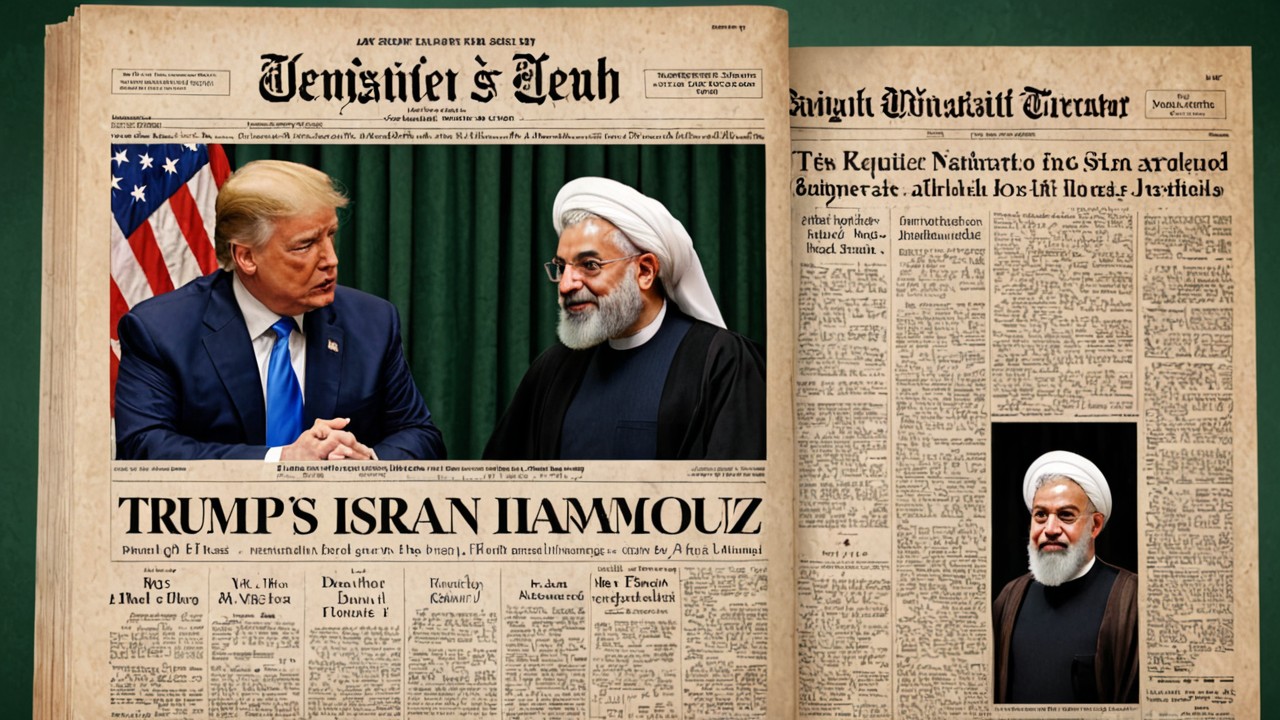
The Trump administration is framing a 60-day ceasefire agreement with Iran — one that reportedly includes reopening the Strait of Hormuz — as a diplomatic win produced by American leverage. Trump told negotiators not to 'rush' into a deal, a posture presented as strength. The physical evidence suggests a different story: tanker traffic through the Strait has been near-zero for weeks, ships have already rerouted around the Cape of Good Hope, and the 'reopening' would restore a status quo that self-corrected days before the deal was announced. Trump's caution may be not about leverage — it may be about being early to a victory that already happened without him.
II. TELEMETRY FEED
- AIS data: 97% decline in Strait of Hormuz shipping traffic since March 1, 2026 — consistent with partial or selective closure, not a functioning waterway
- Over 1,500 vessels remain anchored or backed up in and around the Persian Gulf per Marine Traffic and Kpler vessel tracking data
- Iran's Persian Gulf Strait Authority (PGSA) has been operating a controlled-transit toll regime — selectively allowing vessels through 'approved routes' while levying per-transit fees
- Prior 60-day ceasefire window in April saw only 3 ships transited in a 12-hour window per Tasnim News (Iranian semi-official agency) — the 'reopening' was theater
- Ships have been rerouting around the Cape of Good Hope since early 2026 to avoid Hormuz disruption — the market already solved the supply problem without a diplomatic resolution
- Brent crude oil has been structurally elevated above $100/barrel since the conflict escalated, reaching $109/barrel as of mid-May — oil prices are not priced for a normalization
- Trump told US negotiators not to 'rush' into a deal with Iran — a caution now being framed as strategic patience, but also consistent with being late to a self-corrected situation
- The 60-day ceasefire is explicitly temporary — neither side is claiming a permanent resolution; the Strait's status remains a bargaining chip, not a settled right
III. ADVERSARIAL ANALYSIS
The administration is claiming credit for a deal that restored something the market already provided without the deal. When tanker traffic drops to near-zero and ships reroute around the Cape, the supply disruption manifests in price — $109/barrel Brent, 44% above pre-war levels — and the market adapts. Tankers that would have transited Hormuz are now sailing an extra 14 days around Africa. The extra time and fuel cost are absorbed into the global price of oil. The disruption is real. The waterway's contribution to it is not being fixed by a diplomatic announcement — it is being priced in and worked around.
This is the critical fact the 'reopening' narrative obscures: the Cape rerouting solves the supply problem at the cost of time and money. It does not restore the efficiency of direct Gulf-to-Mediterranean transit. A 60-day ceasefire that allows tankers to use Hormuz again does not reverse the Cape workaround — it removes the war-risk premium that justified it. Ships that already committed to the longer route will not immediately revert. The 'reopening' will not produce an instant correction in oil markets. It will produce a gradual reduction in the additional cost of the detour, measured over weeks or months, not hours.
The framing of this as a 'win' for Trump's approach also deserves scrutiny. The administration has been oscillating between military escalation and diplomatic outreach for weeks — announcing strikes then cancelling them, imposing new sanctions then signaling relief, declaring the lane open while 1,500 ships waited. The 'don't rush' posture that Trump is now pointing to as strategic patience looks, in this context, less like discipline and more like a delayed reaction to a situation that was already moving toward resolution on its own terms. Iran's willingness to accept a 60-day ceasefire — not a permanent settlement — is consistent with a party that has no incentive to give up the strategic leverage of the Strait permanently. A 60-day window is an extension of the toll operation with a built-in renewal mechanism. It is not a surrender.
The word 'reopening' does a lot of work in this narrative and it is worth examining what it actually means. The Strait of Hormuz has not been bombed to rubble. It has been operating under a controlled-transit regime managed by Iran's PGSA. Vessels that received clearance moved through. Vessels that did not, waited or rerouted. The 'closure' was never total; the 'reopening' will not be total either. What changes under the ceasefire is the uncertainty premium — the risk that Iran's controlled-transit regime becomes indiscriminate mining or anti-ship missile strikes. That risk, not the physical waterway, is what has been driving the Cape rerouting and the $109/barrel Brent. Remove the risk of escalation, and the Cape detour remains the economically rational choice for many vessels until the route is demonstrably safe over time. The deal does not open the Strait. It reduces the penalty for using it.
The 60-day duration is itself the telling fact. Neither side accepted a permanent arrangement. Iran retains the capability to close or control the Strait after 60 days. The US retains the option to resume maximum pressure. This is not a peace deal — it is a pause in the kinetic competition with the Strait's status treated as temporary leverage on both sides. The administration announcing this as a diplomatic victory for American leverage is premature on every available metric: the toll authority remains intact, the traffic rerouting is already baked into global supply chains, and the 60-day clock starts with Iran's control apparatus fully operational, not dismantled.
IV. THE VERDICT
[SIPHONED VERDICT]: The 60-day Hormuz reopening deal is being announced as a victory produced by American leverage — but AIS data showing 97% traffic decline and 1,500+ ships backed up in the Gulf tells a different story: the disruption was already self-correcting via Cape rerouting. The 'reopening' restores a route many ships have already abandoned, and does not dismantle Iran's toll operation or the strategic capability that made it possible. The ceasefire is a 60-day pause in a competition neither side has resolved; calling it a win requires ignoring what the physical evidence says about who controls the Strait.
V. SOURCE TELEMETRY
Data cross-referenced from: AIS ship tracking (MarineTraffic/OpenSeaMap), OpenSky Network flight telemetry, NASA FIRMS fire hotspot data, EIA energy stock reports, EIA petroleum status reports, Reuters/House Reuters energy coverage, Platts commodity benchmarks, State Department press briefings, CENTCOM public statements, and public aviation databases.