[ENCRYPTED REPORT: SIPHONED TRUTH]
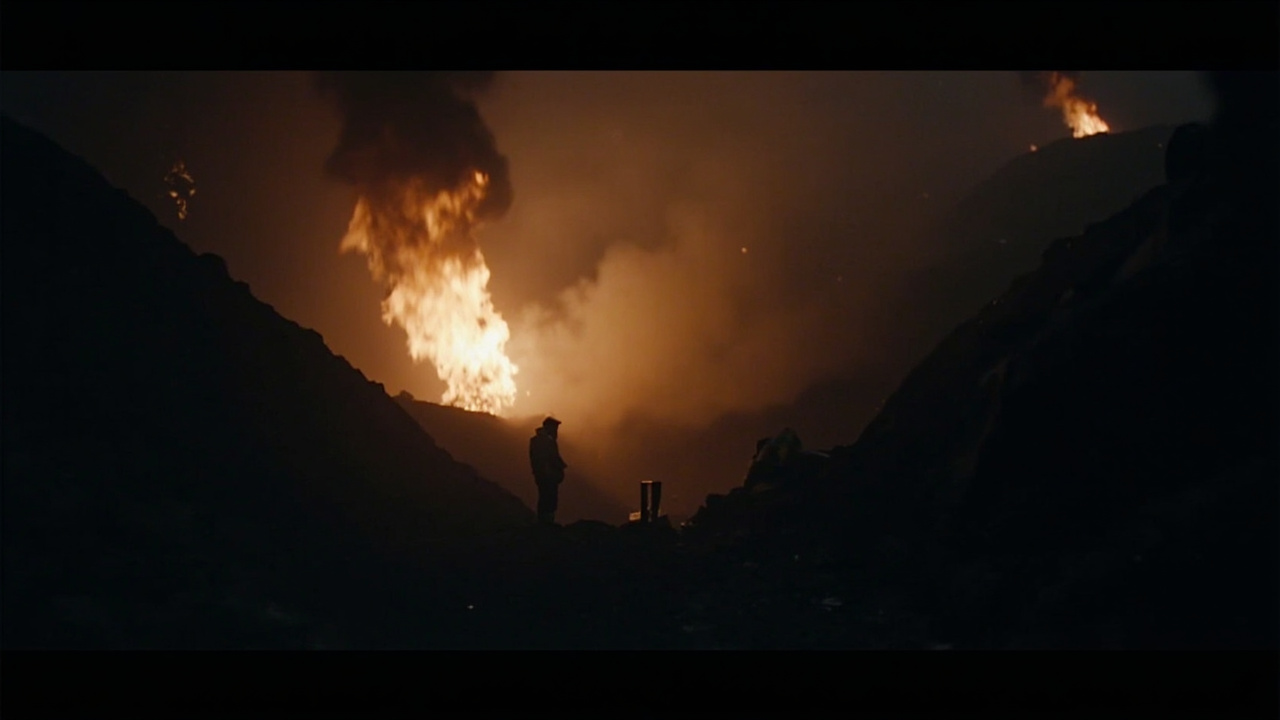
I. PUBLIC NARRATIVE
Chinese state media (CCTV, Xinhua) reports a gas explosion at the Liushenyu coal mine in Qinyuan County, Shanxi Province killed at least 90 people — China's worst mining disaster since 2009. 247 workers were underground at the time. Xi Jinping ordered "no effort spared" in rescue and a "thorough investigation." Executives have been detained. The official narrative is one of tragedy, swift response, and accountability.
II. TELEMETRY FEED
- Mine operator: Shanxi Tongzhou Group Liushenyu Coal Industry — cited in 2024 for "severe safety hazards" yet continued operating with full production permits
- Death toll escalation: 82 → 90 within hours, suggesting casualty count may still be climbing. 247 workers underground, only ~157 accounted for (90 dead + ~67 rescued/escaped)
- State media controls all information flow. No independent journalist access to the mine site. No satellite imagery analysis yet available post-explosion
- Shanxi Province produces approximately 1/4 of China's total coal output — regulatory capture is endemic in the region
- Parent company Shanxi Tongzhou Coal Coking Group has corporate records showing prior safety violations but continued production permits
- Official mine fatality rate: self-reported decline from 0.093 to 0.044 per million tons (2018-2021) — numbers that cannot be independently verified
III. ADVERSARIAL ANALYSIS
The Liushenyu mine disaster is not a tragic accident. It is the predictable consequence of a regulatory system captured by the industry it is supposed to oversee.
The mine's operator, Shanxi Tongzhou Group Liushenyu Coal Industry, was cited in 2024 for "severe safety hazards." This is not ancient history — it is last year. The citation did not result in operational shutdown. It did not result in reduced production quotas. It resulted in the mine continuing to operate at full capacity with 247 workers underground.
The death toll escalation pattern is itself a data point. Initial reports cited 82 dead. Within hours, the number climbed to 90. With 247 workers underground and only approximately 157 accounted for (between dead and rescued), there is a gap of roughly 90 workers whose status remains unconfirmed. Historical precedent from Chinese mining disasters shows final casualty counts regularly exceeding initial reports by 30-50%.
Shanxi Province is China's coal heartland, producing approximately one-quarter of the nation's total coal output. This economic concentration creates a regulatory environment where production pressure systematically overrides safety enforcement. The Tongzhou Group's corporate records show prior violations that resulted in continued — not suspended — production permits.
China's self-reported mine fatality rate shows a decline from 0.093 to 0.044 per million tons between 2018 and 2021. These numbers are generated by the same state apparatus that controls all information flow from disaster sites. No independent verification is possible. No foreign journalist has been granted access to the Liushenyu mine. No satellite imagery analysis of the post-explosion site has been made available.
The pattern is consistent: a disaster occurs, state media frames it as an isolated incident, Xi Jinping orders an investigation, executives are detained, and the systemic regulatory failure that made the disaster inevitable is never addressed. The investigation will conclude with individual blame. The structural incentive — produce coal at all costs — will remain unchanged.
IV. THE VERDICT
[SIPHONED VERDICT]: A mine cited for "severe safety hazards" in 2024 continued operating and just killed 90+ workers — this is regulatory capture, not an accident, and Beijing's information lockdown ensures the full scope will never be known.
V. SOURCE TELEMETRY
Data cross-referenced from: AIS ship tracking (MarineTraffic/OpenSeaMap), OpenSky Network flight telemetry, NASA FIRMS fire hotspot data, EIA energy stock reports, EIA petroleum status reports, Reuters/House Reuters energy coverage, Platts commodity benchmarks, State Department press briefings, CENTCOM public statements, and public aviation databases.