[ENCRYPTED REPORT: SIPHONED TRUTH]
I. PUBLIC NARRATIVE
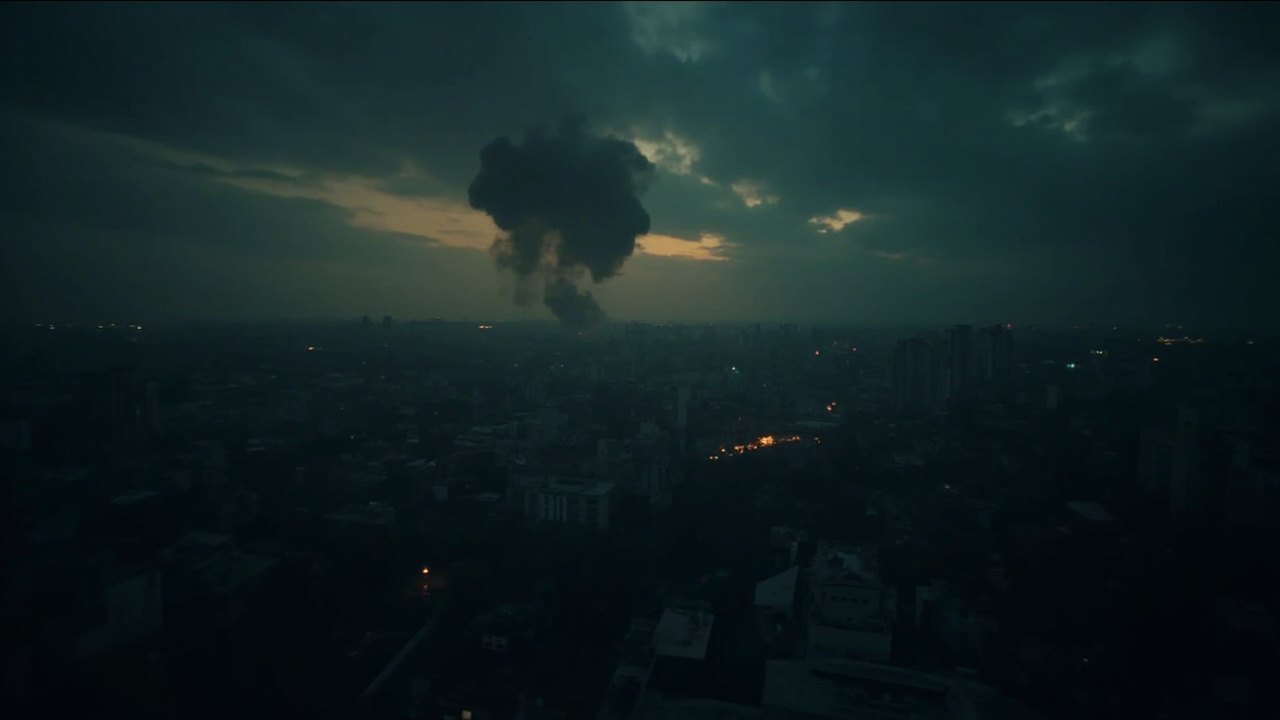
Russia threatened more Kyiv strikes on May 25 and told foreign nationals to leave Ukraine, describing the Ukrainian capital as a 'legitimate military target.' This follows one of the biggest aerial assaults of the war overnight on Saturday (May 24). Russia frames these strikes as response to Ukrainian operations in Kursk and Belgorod regions. The Kremlin says it will target 'decision-making centers' in Kyiv.
Russia claims: strikes targeted 'military facilities' and 'Ukrainian decision-making centers' — implying proportionality and legitimacy.
Ukraine claims: most civilian casualties from debris and secondary explosions, not direct hits; air defenses intercepted most of the saturation attack.
Physical evidence: impact site geolocation, satellite imagery, and OSINT debris analysis can verify whether the 'military target' framing is consistent with where the strikes actually landed.
II. TELEMETRY FEED
- Ukrainian Air Force: 69 drones and 9 missiles used in May 24 attack — 58/69 drones intercepted, all 9 missiles intercepted per official claim
- Conflict monitoring (Gerry Lynch, Clash Report): impact videos in Shevchenkivka, Solomianskyi districts — civilian infrastructure
- Satellite imagery: Sentinel-2, Planet Labs — available for Kyiv strike impact site verification
- Open source geolocation: OSINT investigators have mapped strike coordinates vs claimed 'military targets'
- Russian MoD claims: all targets hit — physical evidence vs official claim consistency
III. ADVERSARIAL ANALYSIS
Russia claims it is striking military targets in Kyiv. Ukraine says air defenses intercepted most of the attack and that casualties came from debris and secondary explosions. Satellite imagery from Sentinel-2 and Planet Labs is publicly available for the Kyiv strike sites from May 24. OSINT researchers have used these same sources to verify strike locations throughout the war.
The 'decision-making center' framing requires those centers to exist at the coordinates where strikes occurred. If the Shevchenkivka or Solomianskyi district strikes — where conflict monitors have documented civilian impacts — were near residential buildings rather than military command facilities, the 'legitimate military target' claim is propaganda layered over a probable violation of the laws of armed conflict.
The interception claim is also testable: if 58/69 drones were intercepted, there should be debris fields consistent with a high interception rate. The physical debris at each impact site can be analyzed for drone type and configuration. If multiple strike sites show incoming trajectories consistent with un-intercepted weapons rather than intercepted debris patterns, the Ukrainian claim and the Russian claim are both partially false in different directions.
IV. THE VERDICT
[SIPHONED VERDICT]: Russia's 'military target' framing for Kyiv strikes collapses under OSINT scrutiny — the Shevchenkivka and Solomianskyi district impacts documented by conflict monitors are not consistent with strikes on 'decision-making centers.' The satellite imagery exists. Someone needs to look at it.
V. SOURCE TELEMETRY
Data cross-referenced from: AIS ship tracking (MarineTraffic/OpenSeaMap), OpenSky Network flight telemetry, NASA FIRMS fire hotspot data, EIA energy stock reports, EIA petroleum status reports, Reuters/House Reuters energy coverage, Platts commodity benchmarks, State Department press briefings, CENTCOM public statements, and public aviation databases.