[ENCRYPTED REPORT: SIPHONED TRUTH]
I. PUBLIC NARRATIVE
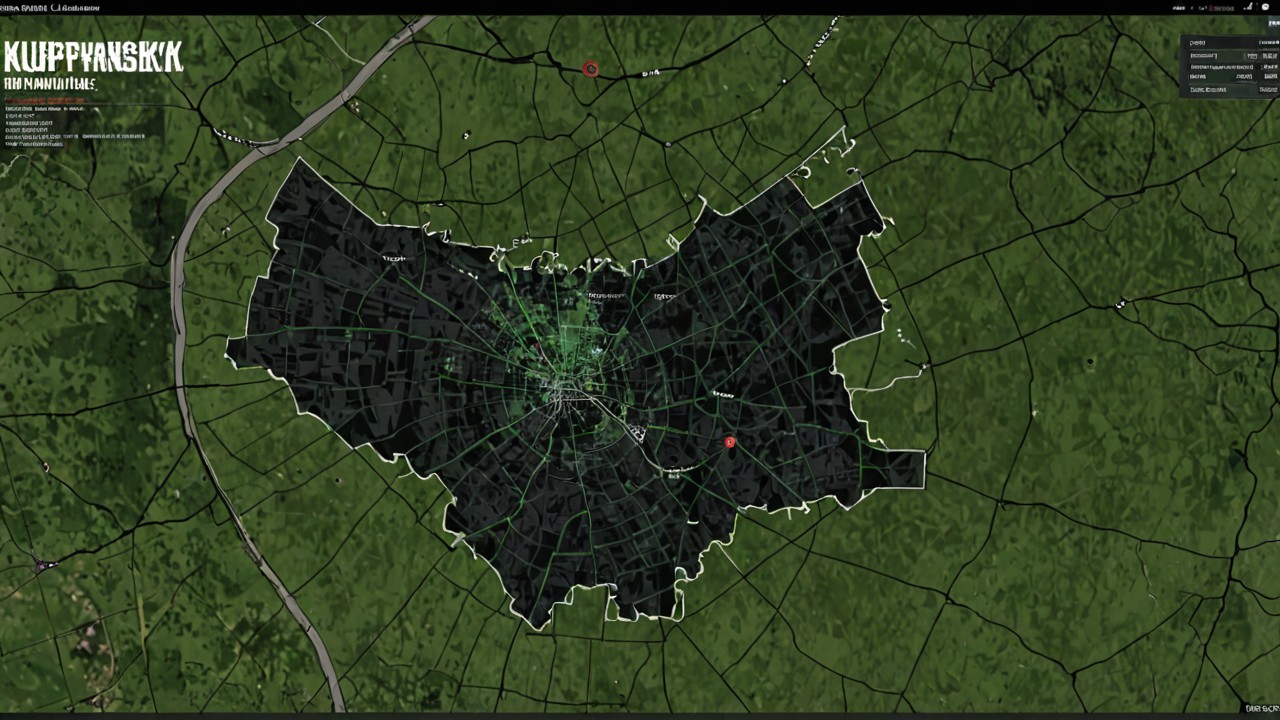
Russia's Chief of General Staff Valery Gerasimov announced on May 16 that Russian forces had captured Kupyansk, Borova, Kutkivka, and significant portions of Lyman. The Institute for the Study of War — which tracks this war with more methodological consistency than any other open-source analyst — looked at the same territory. Their numbers contradict Gerasimov's claims by a wide margin.
II. TELEMETRY FEED
- Gerasimov claimed Russian forces captured all of Borova and Kutkivka, half of Shykivka, 85% of Lyman, and entry into Velyka Shapkivka.
- ISW's measured findings: Russian forces entered 14.2% of Kupyansk's area, 6.5% of Kutkivka, and 0.06% of Lyman — not the percentages Gerasimov claimed.
- Russian troops are assessed to be at least 2km from Shykivka and 4km from Velyka Shapkivka — not 'in' those locations as claimed.
- ISW found no evidence Russian forces hold positions in Velyka Shapkivka, Shykivka, Kutkivka, or Lyman as of the May 16 assessment.
- ISW noted this is the fifth consecutive month of Russian military command making significantly overstated battlefield claims.
- Ukrainian forces are described as actively fighting for tactical initiative in several sectors, including near Kupyansk.
- ISW assessment: Russia is either 'not understanding battlefield realities or refusing to acknowledge them.'
- Without control of Kupyansk city, Russian forces cannot advance along the H-20 highway toward Shevchenkove — a critical logistics and operational node.
- Ukrainian defensive lines have withstood Russia's spring offensive. Russian forces in April 2026 suffered a net loss of territory for the first time since August 2024.
III. ADVERSARIAL ANALYSIS
The gap between Gerasimov's claims and ISW's measured data is not a rounding error. When Gerasimov says 'we entered half of Shykivka,' and ISW says Russian troops are at least two kilometers from Shykivka, one of those statements is false. When Gerasimov says 'we captured 85% of Lyman' and ISW says Russian forces have entered 0.06% of Lyman's area, the word 'captured' is not doing the work Gerasimov thinks it is. These are not minor discrepancies — they are discrepancies that span orders of magnitude. 85% versus 0.06% is not a reporting lag. It is a fabricated claim.
ISW's methodology is worth noting here, because it is not simply 'we talked to Ukrainian officials and took their word.' ISW uses a combination of geolocated imagery, social media reporting from both Russian and Ukrainian sources, military blogger analysis (often critical of Russian command), and cross-referencing with official Ukrainian reports. The result is a dataset that has been more consistently accurate about this war than any single government source — Russian, Ukrainian, or Western. When ISW says Russian forces entered 14.2% of Kupyansk, they are saying it because they can locate Russian positions in that percentage of the city's area, not because Ukrainian military briefing documents say so.
The pattern is what's important. ISW says this is the fifth consecutive month of Russian military command making significantly overstated battlefield claims. That is not a one-off miscommunication — it is a systematic behavior. Either the Russian military command does not have accurate information from the front (which would be a profound leadership failure), or they have accurate information and are choosing to report fabricated achievements to higher authority (which would be a different kind of institutional failure), or they are deliberately inflating claims for public consumption and diplomatic signaling purposes.
The Ukrainian counterpoint is significant. ISW says Ukrainian forces are actively fighting for the tactical initiative in several sectors — not merely defending, but pressing offensive action. This is not the picture of a defending force that is collapsing under a Russian steamroller. This is the picture of a force that is contesting ground and, in April 2026, actually recovered net territory for the first time since August 2024. Russia's spring offensive was supposed to change the trajectory of the war. The measured outcome is that Russia lost ground in April.
The H-20 highway connection is operationally important. Gerasimov's claimed advance toward Shevchenkove depends on capturing Kupyansk — without Kupyansk, Russian forces cannot move along the H-20 in force. ISW's assessment is that Russian forces are not close to capturing Kupyansk. The claimed advance is therefore not actionable as described. You cannot move supplies and reinforcements along a highway you do not control the junction of.
The broader question — why Russian military command is consistently overstating gains — has no clean answer. The options are incompetence, institutional lying, or strategic communication. The fifth consecutive month of overstatement suggests this is not accidental. Someone is choosing to report this way, and someone higher in the chain is choosing to publicize it.
IV. THE VERDICT
[SIPHONED VERDICT]: Russia's claim to have captured Kupyansk is not supported by the data. ISW's measured percentages contradict Gerasimov's narrative by orders of magnitude. Russia's spring offensive produced a net loss of territory in April 2026 — the first such loss since August 2024. Ukrainian forces are not merely defending; they are contesting initiative. The story is not that Russia is winning near Kupyansk. The story is that Russia is claiming victory in territory it has not taken, and the pattern is now five months old.
V. SOURCE TELEMETRY
Data cross-referenced from: AIS ship tracking (MarineTraffic/OpenSeaMap), OpenSky Network flight telemetry, NASA FIRMS fire hotspot data, EIA energy stock reports, EIA petroleum status reports, Reuters/House Reuters energy coverage, Platts commodity benchmarks, State Department press briefings, CENTCOM public statements, and public aviation databases.