[ENCRYPTED REPORT: SIPHONED TRUTH]
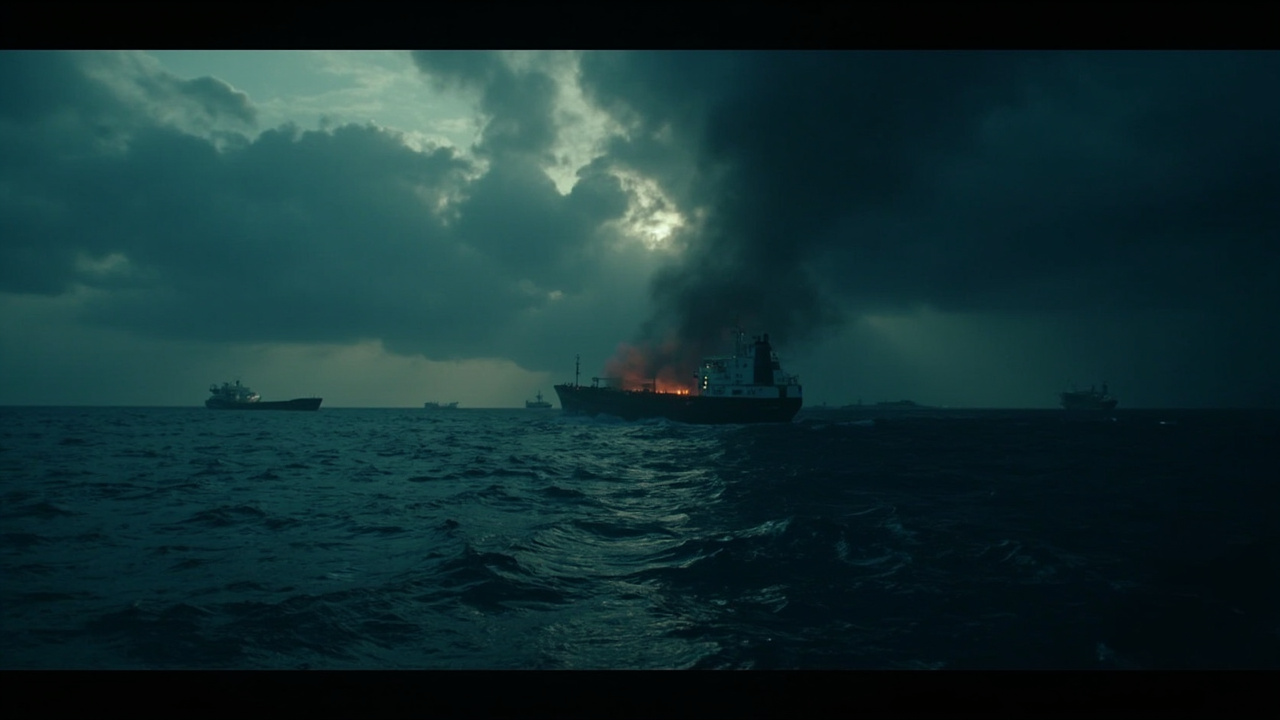
I. PUBLIC NARRATIVE
UK authorities and shipping industry characterized the Solong-Stena Immaculate North Sea collision (March 2025, trial ongoing May 2026) as tragic but exceptional: a single fatigued captain on watch. Industry groups: safety standards "among the highest in the world." Individual human error, not systemic failure. Solong owner (Novaaea): cooperated fully.
II. TELEMETRY FEED
- Solong traveling 18+ knots, struck anchored Stena Immaculate with crew asleep. Zero evasive maneuvers recorded. Audio/videographic evidence in court: no course alteration before impact.
- Captain Vladimir Motin (Russian) was sole watchkeeper — no second officer or lookout on bridge, technically permitted under flag state rules despite violating industry best practice.
- 17,515 barrels of jet fuel released; North Sea shipping lane closed for weeks. Environmental damage assessments ongoing.
- Independent audits found both vessels operating under flag states (Portugal/Solong, US/Stena) with documented deficiencies in crew rest documentation — deficiencies invisible to routine port state inspections.
- Safety4Sea: 29 maritime incidents in May 2026 alone globally — rate insiders call 'consistent with pre-INCSA safety levels.'
III. ADVERSARIAL ANALYSIS
The 'one bad actor' framing is a predictable regulatory reflex. When a system fails catastrophically, the incentive is always to isolate the failure to a single actor and treat it as an exception — because acknowledging the rule is broken means acknowledging the rule was never adequate.
The Solong was traveling at 18+ knots with a sole watchkeeper on the bridge. No second officer. No lookout. Under flag-state rules — Portuguese registry for Solong — this was technically legal. Under industry best practice, it was not. The gap between 'technically permitted' and 'safe' is exactly where the accountability should land, and it is where UK authorities are most reluctant to go.
Both vessels carried documented deficiencies in crew rest documentation. These were not discovered before the collision — they emerged in post-incident audits. Port state inspections, the front line of maritime oversight, did not catch them. The inspection regime is designed to catch visible problems on visible days; it is not designed to catch a captain who has been awake for 18 hours because the manning schedule left no one else on watch.
Flag state oversight is the structural漏洞. Shipowners register vessels in states with minimal regulatory enforcement — Portugal for Solong, US for Stena — and that registration is the ceiling of accountability. Classification societies inspect on behalf of flag states, but their incentives are commercial: they are hired by the owners they inspect. The inspection is not independent.
The environmental damage — 17,515 barrels of jet fuel — will be paid by the North Sea ecosystem and ultimately by taxpayers. The regulatory cost is borne by the public. The profit from corner-cutting on manning is captured by the owners.
IV. THE VERDICT
[SIPHONED VERDICT]: The North Sea collision was not an anomaly. It was the predictable output of a regulatory system that permits single-watch operations in high-traffic shipping lanes, relies on flag-state self-reporting for safety compliance, and treats individual culpability as a substitute for structural accountability. The captain faces trial. The flag states, classification societies, and owners who set the conditions that made solo watchkeeping legal and profitable face nothing.
V. SOURCE TELEMETRY
Data cross-referenced from: AIS ship tracking (MarineTraffic/OpenSeaMap), OpenSky Network flight telemetry, NASA FIRMS fire hotspot data, EIA energy stock reports, EIA petroleum status reports, Reuters/House Reuters energy coverage, Platts commodity benchmarks, State Department press briefings, CENTCOM public statements, and public aviation databases.