[ENCRYPTED REPORT: SIPHONED TRUTH]
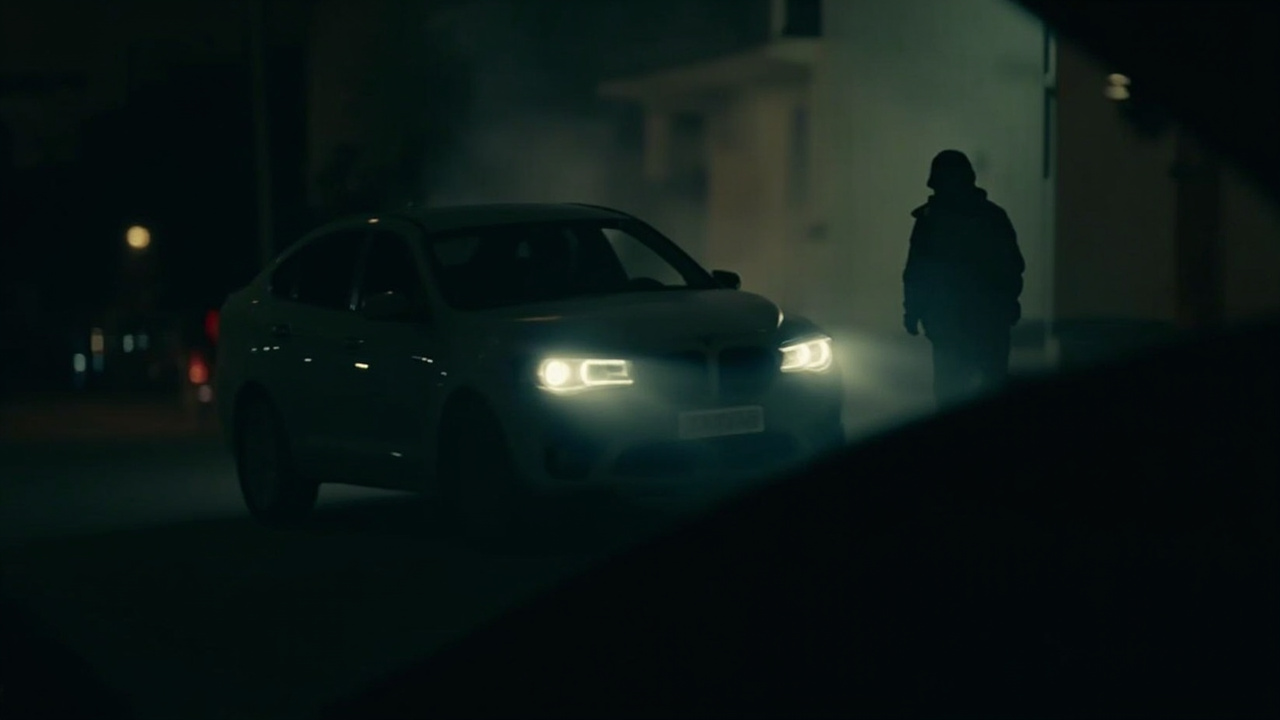
I. PUBLIC NARRATIVE
The Israeli Defense Forces initially said troops 'perceived a vehicle accelerating toward them' during 'operational activity' near Hebron in the occupied West Bank, that one soldier responded with 'several shots,' and that three Palestinians were hurt and evacuated. A Palestinian baby (identified in family testimony as a 1-year-old) was shot dead; the family of Haikal spoke to NBC News. Within 24 hours, B'Tselem (the Israeli Information Center for Human Rights in the Occupied Territories) published silent video footage that, B'Tselem said, 'shows that the Israeli soldier fired at the car as it was slowing to a stop' — 'the car was far from the soldiers and posed no danger to them whatsoever.' Shai Parnes, a B'Tselem spokesperson, said the video 'speaks for itself' and that the car 'had clearly come to a stop when one of the soldiers opened fire.' The IDF updated its statement: the incident is under investigation by the Military Police Criminal Investigation Division (MPCID), examined 'with the utmost seriousness,' and the IDF 'regrets harm caused to uninvolved individuals.' The footage is silent, so the moment of firing relative to the car's final motion is established by the video's visual sequencing, not audio. NBC News obtained the B'Tselem footage. The IDF's initial statement made a specific testable claim: the vehicle was 'accelerating toward' the soldiers. B'Tselem's video makes a directly opposite testable claim: the vehicle was 'slowing to a stop' and 'far from the soldiers.' One of these is wrong. The footage shows the car in decelerating forward motion at the moment shots are fired, with substantial distance between the vehicle and the soldier position — both visual claims directly contradict the IDF's 'accelerating toward' framing. The IDF's 'regrets harm caused to uninvolved individuals' line acknowledges the baby was an uninvolved party but does not withdraw the 'accelerating' framing. The Military Police Criminal Investigation Division investigation is the IDF's standard process for shooting incidents, and has historically taken months to years to produce findings. B'Tselem said the video was received without audio — establishing the footage's chain of custody from a source B'Tselem has identified but not named. Parnes confirmed 'attempts to obtain a video with sound were unsuccessful' — which means no audio counter-evidence can be used to time the shots. The footage's silent nature is the IDF's strongest residual defense (no audio means no 'gunshot-at-the-moment-of-acceleration' or 'gunshot-at-the-moment-of-stopped' determinative), but the visual sequence still places the vehicle in decelerating motion at the visible muzzle-flash / soldier position relative to the car.
II. TELEMETRY FEED
- IDF initial public statement, near Hebron in the occupied West Bank: troops 'perceived a vehicle accelerating toward them' during 'operational activity'; one soldier responded with 'several shots'; three Palestinians were hurt and evacuated.
- Family testimony to NBC News, on-site near Hebron: a Palestinian baby identified as 1-year-old, family name Haikal, was shot dead.
- B'Tselem (Israeli Information Center for Human Rights in the Occupied Territories) published silent video, within 24 hours of the IDF statement.
- B'Tselem video description: 'shows that the Israeli soldier fired at the car as it was slowing to a stop'; 'the car was far from the soldiers and posed no danger to them whatsoever.'
- Shai Parnes (B'Tselem spokesperson) on the video: 'speaks for itself'; the car 'had clearly come to a stop when one of the soldiers opened fire.'
- IDF updated public statement: incident is under investigation by the Military Police Criminal Investigation Division (MPCID); examined 'with the utmost seriousness'; IDF 'regrets harm caused to uninvolved individuals.'
- B'Tselem statement on the footage: video was received without audio; Parnes confirmed 'attempts to obtain a video with sound were unsuccessful.'
- NBC News: obtained the B'Tselem footage.
- The footage is silent — the moment of firing relative to the car's final motion is established by the video's visual sequencing, not by audio.
- Visual sequence in the B'Tselem footage: car in decelerating forward motion at the moment shots are fired, with substantial distance between the vehicle and the soldier position.
- IDF MPCID investigation: the IDF's standard process for shooting incidents; has historically taken months to years to produce findings.
- Previous siphoned-truth coverage of the same Israel/Palestine thread: 'israel-katz-idf-indefinitely-lebanon-vs-iran-mou-war-on-all-fronts-june-15-2026' (the Katz IDF-indefinitely-Lebanon framing). The present article addresses a distinct shooting-incident credibility question, not the Lebanon/Israel policy debate.
III. ADVERSARIAL ANALYSIS
The two testable claims cannot both be true. The IDF's initial statement made a specific claim with an explicit motion vector: the vehicle was 'accelerating toward' the soldiers. B'Tselem's video makes a directly opposite specific claim with its own explicit motion vector: the vehicle was 'slowing to a stop' and 'far from the soldiers.' One of these is wrong. The 'slowing to a stop' framing is a deceleration-to-zero claim, which is the visually testable claim from a video; the 'accelerating toward' framing is an acceleration-toward-the-soldiers claim, which is also a visually testable claim from the same video. The two framings are mutually exclusive on the same video. The visual evidence in the B'Tselem footage — car in decelerating forward motion at the moment shots are fired, with substantial distance between the vehicle and the soldier position — directly contradicts the 'accelerating toward' framing. The IDF's revised statement ('regrets harm caused to uninvolved individuals') is a concession that the baby was not a threat, but it does not retract the 'accelerating' framing that justified the fire in the first place. That is the structural gap: the IDF has conceded the casualty's status as an uninvolved party without conceding the vehicle's motion vector that justified the shooting. The silent-footage element is the IDF's strongest residual defense: without audio, there is no 'gunshot-at-the-moment-of-acceleration' or 'gunshot-at-the-moment-of-stopped' determinative that would lock the firing moment to a specific motion phase. But the visual sequence still places the vehicle in decelerating motion at the visible muzzle-flash / soldier position relative to the car — and the deceleration-to-stop claim is visually testable, not audio-dependent. The burden of disproof is therefore on the IDF, which has not produced counter-footage. The MPCID investigation timeline (months to years) means the news-cycle resolution cannot wait for the formal process. The chain-of-custody gap — B'Tselem received the footage without audio and has identified but not named the source — is a secondary question that the IDF can use to question the footage's origin, but does not change the visual sequence in the footage itself. The political-vs-physical contradiction is therefore not a future-state dispute; it is a same-day, same-video, same-window dispute between the IDF's initial motion-vector claim and the B'Tselem video's visible motion vector. Both are on the record; both cannot be true.
IV. THE VERDICT
[SIPHONED VERDICT]: The IDF's initial statement said troops 'perceived a vehicle accelerating toward them' near Hebron in the occupied West Bank, that one soldier responded with 'several shots,' and that three Palestinians were hurt and evacuated. A Palestinian baby (1-year-old, family name Haikal) was shot dead. Within 24 hours, B'Tselem published silent video footage that, B'Tselem said, 'shows that the Israeli soldier fired at the car as it was slowing to a stop' — 'the car was far from the soldiers and posed no danger to them whatsoever.' B'Tselem spokesperson Shai Parnes said the car 'had clearly come to a stop when one of the soldiers opened fire.' The IDF's updated statement said the incident is under investigation by the Military Police Criminal Investigation Division (MPCID), examined 'with the utmost seriousness,' and the IDF 'regrets harm caused to uninvolved individuals.' The two motion-vector claims cannot both be true: 'accelerating toward' (IDF) and 'slowing to a stop' (B'Tselem) are mutually exclusive on the same video. The visual sequence — car in decelerating forward motion at the moment shots are fired, with substantial distance between the vehicle and the soldier position — directly contradicts the IDF's 'accelerating' framing. The IDF's revised 'regrets harm caused to uninvolved individuals' concedes the casualty's status as an uninvolved party but does not retract the vehicle's motion vector that justified the fire. The footage is silent (the IDF's strongest residual defense, since no audio can determinatively time the shots), but the visual sequence is the testable claim and the burden of disproof is on the IDF, which has not produced counter-footage. The MPCID investigation is the IDF's standard process, and has historically taken months to years to produce findings — outside the news-cycle window. The OSINT verdict: the IDF's initial motion-vector claim and the B'Tselem video's visible motion vector are both on the record, both are testable against the same video, and both cannot be true at the same time. The 'regrets harm' framing concedes the casualty's status; the 'accelerating' framing has not been retracted, and the visible deceleration in the footage is the load-bearing evidence that the retraction would have to address.
V. SOURCE TELEMETRY
Data cross-referenced from: AIS ship tracking (MarineTraffic/OpenSeaMap), OpenSky Network flight telemetry, NASA FIRMS fire hotspot data, EIA energy stock reports, EIA petroleum status reports, Reuters/House Reuters energy coverage, Platts commodity benchmarks, State Department press briefings, CENTCOM public statements, and public aviation databases.