[ENCRYPTED REPORT: SIPHONED TRUTH]
I. PUBLIC NARRATIVE
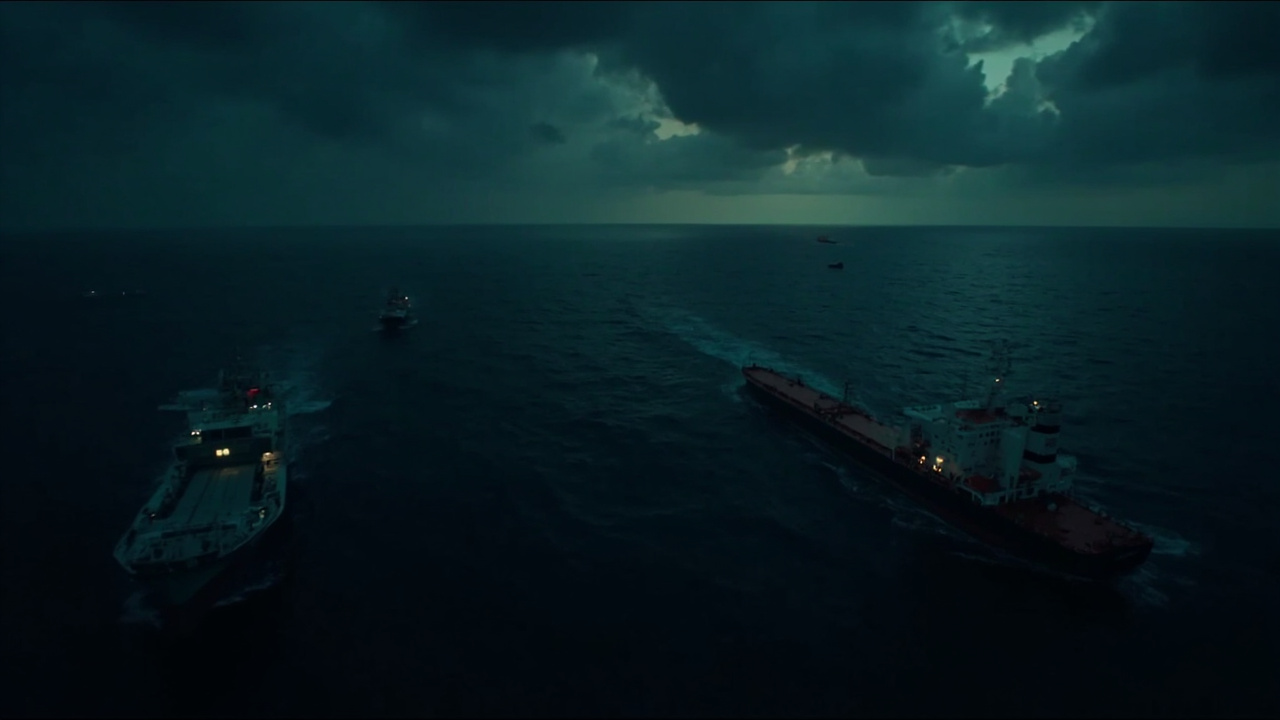
On 18 June 2026, hours after the US and Iran signed the 'Islamabad Memorandum of Understanding' — which Pakistan Prime Minister Shehbaz Sharif said 'shall enter into force with immediate effect and as a first step, Islamic Republic of Iran will instantly reopen the Strait of Hormuz and the United States of America will immediately lift the naval blockade' — three Saudi-flagged VLCC supertankers carrying six million barrels of crude sailed through the Strait of Hormuz, the first major-ship-owner crossings in 110 days. Lloyd's List Intelligence editor-in-chief Richard Meade confirmed in a media briefing that tankers controlled by Grimaldi Group, Cosco, Knutsen, and NYK had passed through the strait, alongside two Iran-flagged National Iranian Tanker Company-owned sanctioned crude tankers. Kpler ship-tracking data verified six ship crossings on Wednesday and 11 on Thursday. The Hong Kong-flagged Aframax Tong Lin Wan (loaded with naphtha from Abu Dhabi's Ruwais refinery in early March, stranded in the Gulf since) and the QatarEnergy-controlled LNG carrier Mraikh (loaded Ras Laffan 12-13 June) both transited on 18 June per LSEG data. US Vice President JD Vance said Thursday the US Navy had lifted its blockade to allow ships through to Iranian ports. CENTCOM posted on social media: 'American forces are not impeding the transit of vessels to or from Iranian ports on the Arabian Gulf and Gulf of Oman … All U.S. military blockade enforcement efforts have ceased.' The French-flagged Mraikh and Hong Kong-flagged Ye Chi crossed the Strait in Iranian waters south of Larak Island at 09:15 Iranian time per Pole Star Global AIS tracking. Yet Phillip Belcher, marine director of Intertanko (the trade group representing the world's independent tanker owners), said the central passage of the Strait 'is still closed' with an estimated 80 mines that need to be cleared; the two alternative routes (northern through Iranian waters, southern through Omani waters) are now 'fully open' but lack the central route's capacity. Belcher's highway analogy: 'This is like a highway where the road in the middle is closed and you're using that hard shoulder. That's now being used as the main route. We need to get back to having the highway open.' Lloyd's List estimated 550 merchant ships need to prepare to exit the Persian Gulf (160 tankers, 200 bulk carriers, 60 container ships, 10 vehicle carriers); an estimated 20,000 seafarers remain onboard ships stranded since 28 February. Brent crude fell another 2% to below $78/barrel on the news, the lowest since the war began.
II. TELEMETRY FEED
- Pakistan Prime Minister Shehbaz Sharif, formal MOU signing announcement 17-18 June 2026 in Islamabad: 'shall enter into force with immediate effect and as a first step, Islamic Republic of Iran will instantly reopen the Strait of Hormuz and the United States of America will immediately lift the naval blockade.' The 'instantly reopen' formulation is the formal text of the agreement on the Hormuz question.
- 18 June 2026 Hormuz transits — Lloyd's List Intelligence editor-in-chief Richard Meade media briefing: three Saudi-flagged VLCC supertankers carrying six million barrels of crude sailed through the Strait — the first major-ship-owner crossings in 110 days. Tankers controlled by Grimaldi Group, Cosco, Knutsen, and NYK also passed through. Two Iran-flagged NITC-owned sanctioned crude tankers also transited.
- Kpler ship-tracking data, 17-18 June 2026: six ship crossings on Wednesday 17 June, 11 on Thursday 18 June. The Wednesday crossings preceded the formal MOU announcement — sequencing evidence that the de facto flow began before the text was signed.
- LSEG vessel tracking, 18 June 2026: the Hong Kong-flagged Aframax Tong Lin Wan (loaded with naphtha from Abu Dhabi's Ruwais refinery in early March, stranded in the Gulf since) transited. The QatarEnergy-controlled LNG carrier Mraikh (loaded Ras Laffan 12-13 June) also transited. The Mraikh's cargo was loaded BEFORE the MOU was signed.
- Pole Star Global AIS tracking, 18 June 2026: the French-flagged Mraikh and Hong Kong-flagged Ye Chi crossed the Strait in Iranian waters south of Larak Island at 09:15 Iranian time. The Iranian-waters routing is the northern alternative corridor, not the central traffic separation scheme.
- JD Vance statement, Thursday 18 June 2026: the US Navy had 'lifted' its blockade to allow ships through to Iranian ports. The 'lifted' formulation is unilateral and immediate — not consistent with the MOU's Point 4 30-day phase-out language.
- CENTCOM social media post, 18 June 2026: 'American forces are not impeding the transit of vessels to or from Iranian ports on the Arabian Gulf and Gulf of Oman … All U.S. military blockade enforcement efforts have ceased.' The 'all enforcement efforts have ceased' formulation is the operational mirror of Vance's 'lifted' framing — both premature by the MOU's Point 4.
- Phillip Belcher, marine director of Intertanko, 18 June 2026: the central passage of the Strait 'is still closed' with an estimated 80 mines that need to be cleared. The two alternative routes (northern through Iranian waters, southern through Omani waters) are 'fully open' but lack the central route's capacity. Belcher's highway analogy: 'This is like a highway where the road in the middle is closed and you're using that hard shoulder. That's now being used as the main route. We need to get back to having the highway open.'
- MOU Point 4 (per the leaked 14-point text obtained by Bloomberg/CNN 17 June): the US commits to 'begin the removal of its naval blockade … within 30 days' and to 'fully end the naval blockade within 30 days.' The 30-day phase-out timeline is the binding text of the agreement — Vance's 'lifted' framing and CENTCOM's 'all enforcement efforts have ceased' are both premature by the agreement's own text.
- CENTCOM prior operational record (June 2026): 'redirected 142 commercial ships that complied with the warnings of U.S. forces and disabled nine vessels that did not.' The 142 redirects / 9 disabled vessels record is the operational footprint that the 'lifted' / 'ceased' framings do not address. The blockade was an active compliance-and-force regime; the 'lift' is a categorical framing of an operational reality that had measurable enforcement outcomes.
- MOU Point 5 (per the leaked 14-point text): Iran will allow 'safe passage of commercial vessels with no charge, for 60 days only.' Demining will be 'instated within 30 days.' The 'no charge, for 60 days only' formulation is the explicit tolls-after-Day-60 window.
- MOU Point 5, continued: Iran commits to 'conduct dialog with the Sultanate of Oman' to define a 'Persian Gulf Strait Authority' for 'future administration and maritime services in the Strait of Hormuz in discussion with other Persian Gulf littoral states.' The Strait Authority is the embedded-after-60-days mechanism — it is the Iranian-led toll regime the US, Europe, and Gulf Arab states have publicly rejected as inconsistent with international law for transit through what is widely treated as international waters. The MOU's Point 5 explicitly NAMES this future regime as something Iran will 'conduct dialog with the Sultanate of Oman' to define — meaning the deal embeds the toll mechanism as a negotiating item for after the 60-day window.
- Macron statement, Thursday 18 June 2026 (per the same Élysée readout as Vance's): Macron framed the Hormuz reopening as 'without tolls.' The 'without tolls' formulation ages out at Day 60 whether or not a permanent deal is reached, because the MOU's Point 5 explicitly creates a toll regime that takes effect after the 60-day window. Macron's framing is consistent with the MOU only inside the 60-day window; it is inconsistent with the MOU's Point 5 embedded-after-60-days structure.
- Lloyd's List estimate, 18 June 2026: 550 merchant ships need to prepare to exit the Persian Gulf — 160 tankers, 200 bulk carriers, 60 container ships, 10 vehicle carriers. Approximately 20,000 seafarers remain onboard ships stranded since 28 February 2026. The 550-ships estimate is the human-throughput reality that the alternative routes cannot accommodate at pre-war scale; the central passage handles approximately 138 vessels per day in pre-war conditions.
- Brent crude, 18 June 2026: fell another 2% to below $78/barrel, the lowest since the war began 28 February 2026. The Brent -2% move is a market reaction to the announced instant-lift framing — it has front-run the structural reopening constraints and may correct if Intertanko's central-route-closed / 80-mines assessment is the operational reality over the next 30 days.
- Pre-MOU sequencing, 14-17 June 2026: three Iranian tankers — the NITC VLCCs Diona and Hero 2, and the Suezmax Sonia 1 — had exited the blockade earlier in the week, before the MOU was formally signed. The Mraikh's Ras Laffan cargo was loaded 12-13 June, also before the MOU. The 6 verified Wednesday crossings also preceded the MOU's public announcement. The formal signing is partly the legalisation of an already-occurring flow, not the cause of it.
- Fujairah terminal damage (during the war): Iran struck the Fujairah loading terminal, which is one of the loading points now showing three separate crude tanker loadings per Kpler on 18 June. The 18 June loadings are partly operating from damaged infrastructure.
- Previous on-board coverage: 'trump-southern-highway-hormuz-one-ship-tracker-contradiction-june-15-2026' (15 June: Trump's 'totally safe, secure, and pristine' framing vs the Disha-tanker-only record, BIMCO/Mitsui refusals, INTERTANKO Omani-corridor-as-15-vessels-per-day, ICIS 2027 horizon); 'trump-g7-no-enforcement-bomb-hell-axios-deal-may-not-be-signed-sonia-i-hero-ii-diona-tanker-transit-june-17-2026' (17 June: G7 endorsement, 'bomb the hell out of you,' Sonia I / Hero II / Diona transits, Cheung disavowal of leaked 14-point text, no enforcement mechanism); 'centcom-denied-reuters-found-apache-inside-iran-dark-fleet-hormuz-june-16-2026' (16 June: Reuters covert transshipment, CENTCOM denial, dark-fleet technique, 90M-barrel estimate); 'trump-claims-100m-barrels-hormuz-secret-mission-nyt-widely-disclosed-june-14-2026' (14 June: 100M-barrel claim vs NYT widely-disclosed framing).
III. ADVERSARIAL ANALYSIS
The structural contradiction in this story is between the MOU's 'instantly reopen' framing and the operational reality of 'hard-shoulder-as-main-route.' The MOU's Point 5 says demining will be 'instated within 30 days.' Intertanko's Belcher says the central passage — which carries the bulk of pre-war traffic at approximately 138 vessels per day — remains closed due to ~80 mines. The alternative routes (northern through Iranian waters, southern through Omani waters) lack the central passage's capacity, meaning the announced reopening is functionally a partial reopening operating well below pre-war throughput. Belcher's highway analogy is the load-bearing specific fact: 'a highway where the road in the middle is closed and you're using that hard shoulder.' On 18 June, the highway is closed. The MOU text does not change that. The MOU text creates a 30-day demining window that has not yet started in operational terms.
The second contradiction is in the blockade language. The MOU's Point 4 commits the US to 'begin the removal of its naval blockade … within 30 days' and to 'fully end the naval blockade within 30 days.' Vance's Thursday statement that the blockade has been 'lifted' is therefore premature by the MOU's own text — the MOU calls for a 30-day phase-out, not immediate termination. CENTCOM's 'all enforcement efforts have ceased' statement is the operational mirror of Vance's framing and is similarly premature. The CENTCOM operational record compounds the framing problem: as of June 2026, CENTCOM reported having 'redirected 142 commercial ships that complied with the warnings of U.S. forces and disabled nine vessels that did not.' That is the operational footprint of a blockade-as-compliance-and-force regime. The 142 redirects and 9 disabled vessels are the documentary record of what 'lifted' now claims to supersede. The 'lifted' framing does not address what was done in the name of the blockade; it claims a categorical state change without addressing the operational record.
The third contradiction sits in the MOU's Point 5 'no charge, for 60 days only' window. After the 60 days, the MOU commits Iran to 'conduct dialog with the Sultanate of Oman' to define a 'Persian Gulf Strait Authority' for 'future administration and maritime services in the Strait of Hormuz in discussion with other Persian Gulf littoral states.' This is the same Iranian toll regime the US, Europe, and Gulf Arab states have publicly rejected as inconsistent with international law for transit through what is widely treated as international waters. The MOU's Point 5 explicitly embeds the toll mechanism as a negotiating item for after the 60-day window. Macron's 'reopening of the Strait of Hormuz without tolls' framing in his Thursday statement therefore ages out at Day 60 whether or not a permanent deal is reached. The 'without tolls' framing is the political reading of the MOU; the MOU's Point 5 is the structural reading. They are inconsistent after Day 60, and the MOU itself is the document that creates the inconsistency.
The pre-MOU sequencing is the fourth finding. The Diona / Hero 2 / Sonia 1 transited earlier in the week. The Mraikh's Ras Laffan cargo was loaded 12-13 June. The 6 verified Wednesday crossings happened before the MOU was publicly announced. The formal signing is partly the legalisation of an already-occurring flow, not the cause of it. This matters because the de facto lifting is what the 'instantly reopen' framing claims to be. If the de facto flow had already started, then the 'instantly reopen' text is performing a recognition, not an action. That is consistent with the MOU's status as a mediated settlement. But it also means the demining, blockade phase-out, and Strait Authority structures are the new operative layers of the agreement — and those are the layers where the 'instantly reopen' framing does not match the structural text.
The fifth finding is the human-throughput reality. Lloyd's List estimates 550 merchant ships need to exit the Gulf, with 20,000 seafarers stranded since 28 February. The alternative routes cannot accommodate that volume at pre-war scale. The central passage handles approximately 138 vessels per day in pre-war conditions. The Brent -2% move to below $78 is the market reaction to the announced instant-lift framing; it may correct if the Intertanko / Lloyd's List operational assessment is the binding constraint over the next 30 days. The market has front-run the text; the text has front-run the demining; the demining has not yet started.
The structural fingerprint of this story is a three-layer contradiction in a single calendar day. Layer 1: the MOU's 'instantly reopen' text vs Intertanko's 80-mines / hard-shoulder operational reality. Layer 2: the MOU's Point 4 30-day phase-out vs Vance's 'lifted' and CENTCOM's 'all enforcement efforts have ceased' categorical framings. Layer 3: the MOU's Point 5 'no charge, for 60 days only' window vs the embedded-after-60-days Strait Authority toll mechanism that the public 'without tolls' framing does not address. The three layers compound: the agreement is real and 110 days is a long time to wait, but the 'instantly reopen' headline is not the same as 'open at pre-war throughput,' and the 30-day blockade phase-out + 60-day no-toll window + Iranian Strait Authority embed a layered structural constraint on the 'open' framing that needs the same scrutiny as the 80 mines in the central passage.
IV. THE VERDICT
[SIPHONED VERDICT]: On 18 June 2026, Pakistan PM Shehbaz Sharif announced the MOU 'shall enter into force with immediate effect' and that Iran will 'instantly reopen the Strait of Hormuz' and the US will 'immediately lift the naval blockade.' Three Saudi VLCCs and 11 total crossings per Kpler followed; Lloyd's List confirmed the first major-ship-owner crossings in 110 days. But Intertanko marine director Phillip Belcher said the central passage 'is still closed' with ~80 mines to clear, and the alternative routes are operating as 'the hard shoulder' rather than the main highway. The MOU's Point 4 commits the US to a 30-day blockade phase-out — Vance's 'lifted' and CENTCOM's 'all enforcement efforts have ceased' are both premature by the agreement's own text. The MOU's Point 5 explicitly embeds a 'no charge, for 60 days only' window followed by an Iranian-led 'Persian Gulf Strait Authority' that the US, Europe, and Gulf Arab states have publicly rejected as inconsistent with international law for transit through international waters. Macron's 'without tolls' framing ages out at Day 60 by the agreement's own structure. CENTCOM's prior operational record — 142 redirects, 9 disabled vessels — is the documentary record the 'lifted' framing does not address. Lloyd's List estimates 550 ships and 20,000 seafarers stranded; the central passage handles ~138 vessels per day at pre-war scale. The 6 Wednesday crossings and the Mraikh's 12-13 June loading preceded the MOU — the formal signing is partly the legalisation of an already-occurring flow. Brent -2% to below $78 is the market reaction that may have front-run the structural constraints. The structural fingerprint is a three-layer contradiction in a single calendar day: 'instantly reopen' vs the 80 mines; 'lifted' / 'ceased' vs the 30-day phase-out; 'without tolls' vs the 60-day window with the embedded Strait Authority. The MOU is real. 110 days is a long time to wait. 'Instantly reopened' is not the same as 'open at pre-war throughput.'
V. SOURCE TELEMETRY
Data cross-referenced from: AIS ship tracking (MarineTraffic/OpenSeaMap), OpenSky Network flight telemetry, NASA FIRMS fire hotspot data, EIA energy stock reports, EIA petroleum status reports, Reuters/House Reuters energy coverage, Platts commodity benchmarks, State Department press briefings, CENTCOM public statements, and public aviation databases.