[ENCRYPTED REPORT: SIPHONED TRUTH]
I. PUBLIC NARRATIVE
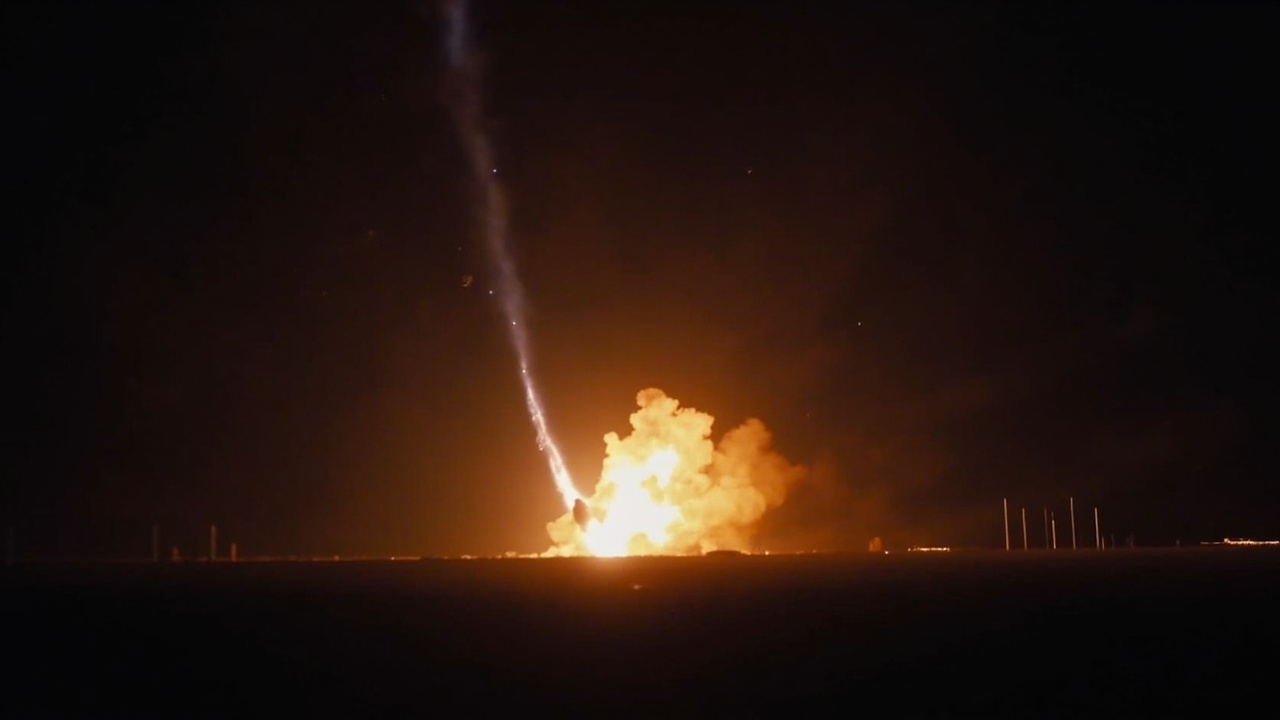
A Blue Origin New Glenn rocket exploded at approximately 21:00 local time on Thursday night during a routine engine test at Space Launch Complex 36 (LC-36) at Cape Canaveral, Florida. The explosion caused extensive damage, including the toppling of one of the pad's lightning protection towers. Jeff Bezos wrote on X: "Very rough day, but we'll rebuild whatever needs rebuilding and get back to flying." The 98-metre rocket had been due to launch 48 satellites for Amazon's Leo broadband network as early as 4 June. The blast came just days after NASA administrator Jared Isaacman announced the first three missions of the agency's plans to build a lunar base — a project he billed as the start of a "permanent presence" at the Moon's south pole. The first mission, Moon Base 1, was to be flown on Blue Origin's robotic Blue Moon Mark 1 lander, targeted for launch no earlier than autumn 2026.
II. TELEMETRY FEED
- LC-36 is the ONLY facility in the world built to launch the New Glenn rocket — until the pad is rebuilt and re-certified, Blue Origin has no way to fly its largest rocket.
- Analysts expect the rebuild to take "months, not weeks." NASA administrator Isaacman announced Moon Base 1 missions "days before" the explosion.
- Moon Base 1 was to ride to the Moon on a New Glenn — the same type of rocket now scattered across LC-36.
- NASA just handed Blue Origin a contract worth up to $468m to deliver two commercial lunar terrain vehicles to the Moon's south pole by 2028.
- NASA's target date for a crewed lunar landing: 2028 — this date "had been questioned even before" the explosion.
- The destroyed rocket was due to deploy 48 satellites for Amazon's Leo broadband constellation (formerly Project Kuiper) — designed to challenge SpaceX's Starlink.
- Bezos's public framing: "We'll rebuild" — but the physical reality is that the only launch pad for NASA's chosen lunar lander carrier is destroyed.
- The 2028 crewed landing timeline was already considered ambitious before the explosion.
III. ADVERSARIAL ANALYSIS
NASA's narrative is "permanent presence at the Moon" and a timeline that extends to 2028. The physical reality: the only rocket that can carry the lunar lander just destroyed its only launch pad. The timing is exquisite — Isaacman announced the Moon Base missions days before the explosion, and NASA had just awarded Blue Origin $468m for lunar rovers. The public framing is "we'll rebuild," but the analysts say months, not weeks. The deeper story is NASA's dependence on a single commercial partner with a single launch facility for its most ambitious lunar program since Apollo. The explosion didn't just damage a pad — it exposed the fragility of a lunar strategy built on one rocket, one pad, and one contractor.
IV. THE VERDICT
[SIPHONED VERDICT]: NASA announced a "permanent presence" at the Moon days before the only rocket capable of carrying its lunar lander destroyed the only launch pad in the world that can handle it — the gap between the agency's confident timeline and the physical reality of a scattered launch facility reveals that the Moon base was always one explosion away from collapse.
V. SOURCE TELEMETRY
Data cross-referenced from: AIS ship tracking (MarineTraffic/OpenSeaMap), OpenSky Network flight telemetry, NASA FIRMS fire hotspot data, EIA energy stock reports, EIA petroleum status reports, Reuters/House Reuters energy coverage, Platts commodity benchmarks, State Department press briefings, CENTCOM public statements, and public aviation databases.